Case study · mobile · 2026
ugoki: a coach in your pocket.
A native app pairing intermittent fasting with short high-intensity workouts, coached by a governed AI. Built solo; a cold outreach brought interest from a London venture firm.
My own live product, built outside this concept. Not work for Fin.
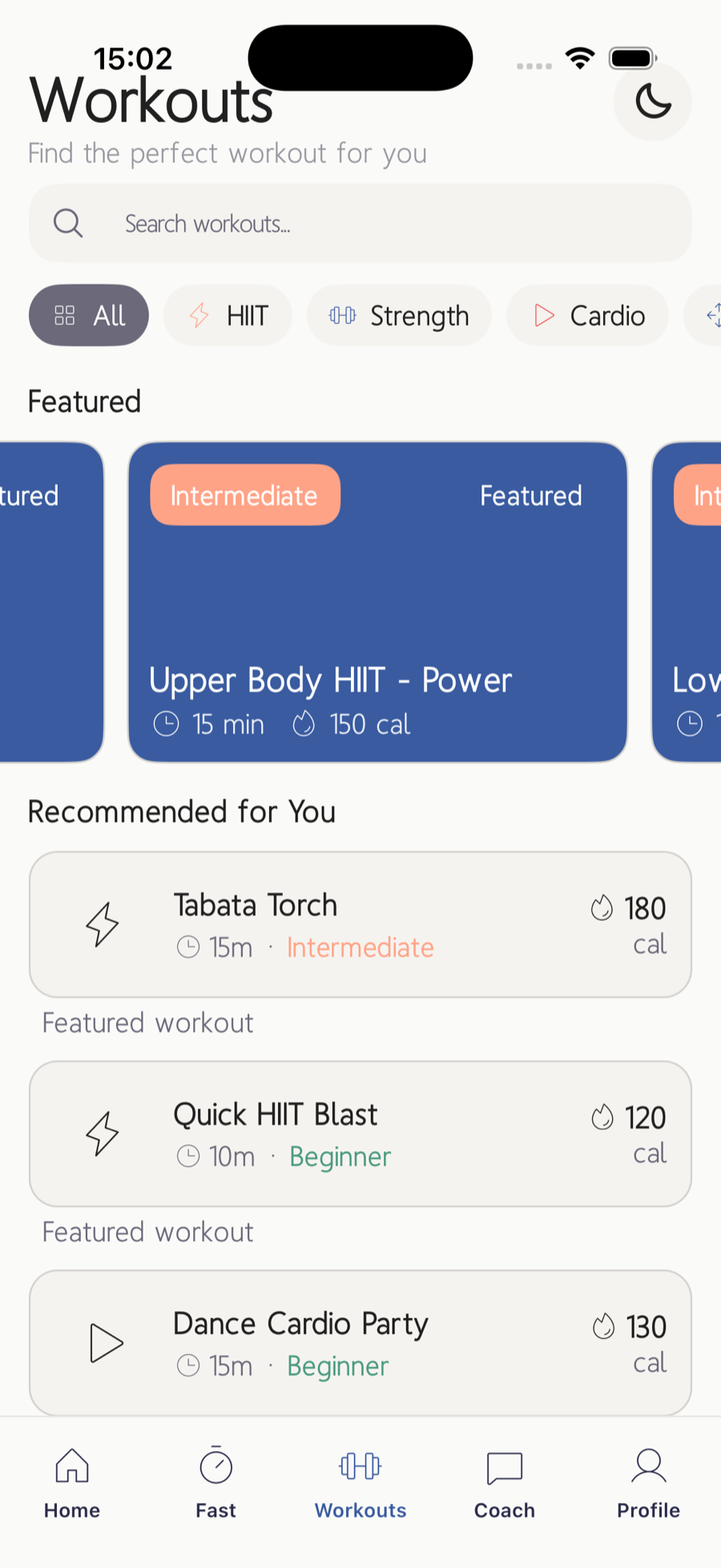
- curated workouts
- 23
- exercises with video
- 114
- fasting protocols
- 3
- achievements in the habit loop
- 21
The context
Busy people do not lack health information; they lack twenty spare minutes and someone who notices when they quietly stop. UGOKI wraps fasting and short workouts in a coach that remembers you, all inside fifteen to twenty minutes a day.
The bet
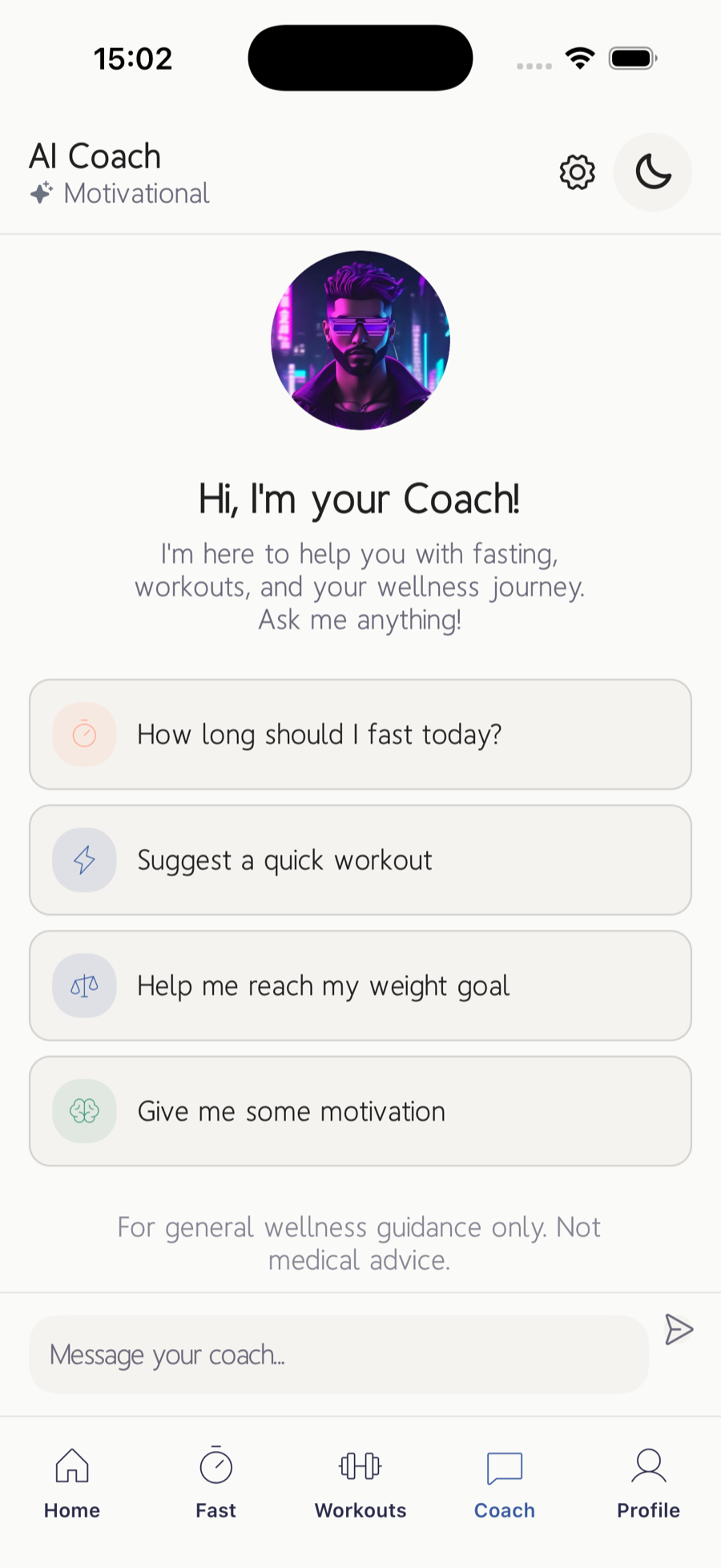
The coach is the product: rules that put safety above engagement, memory that carries goals and injuries across sessions, and a judge scoring every answer for drift.
The design decisions
The coach is governed, not just prompted.
Rules order safety over evidence and evidence over enthusiasm; skills load by query; memory persists across sessions; a judge loop scores every answer. The design surface of an AI product is the rules, not the chat.
Guardrails live in the interface.
"For general wellness guidance only. Not medical advice." sits permanently on the coach screen, and suggested prompts keep the conversation inside its competence.
Native, on one token contract.
Expo and Tamagui on a tiered token system, so screens land consistent on iOS and Android without per-platform pixel pushing.
Empty states do the onboarding.
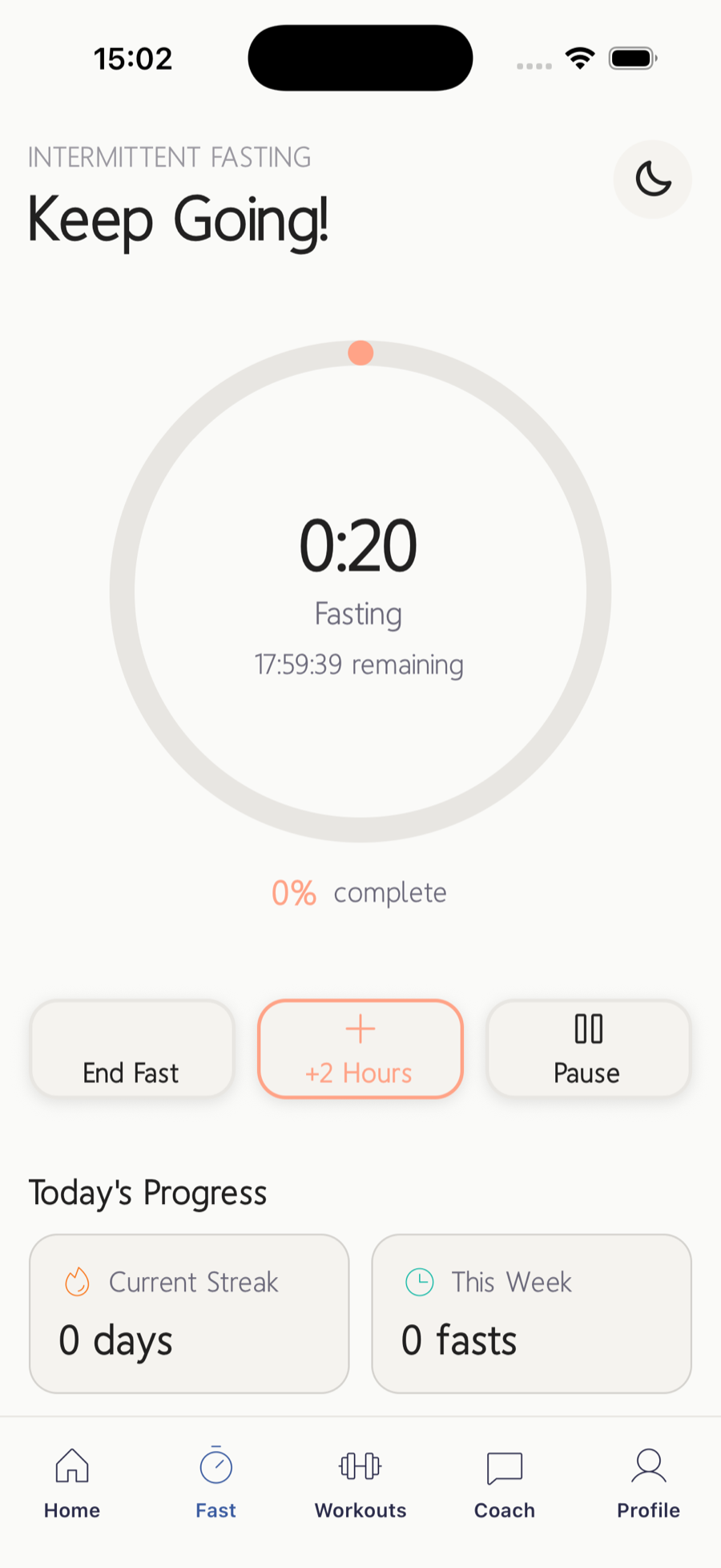
A tracker with no data has one job: make day one startable. The first-run dashboard leads with the next action rather than a wall of zeros.
Health data arrives on its own.
Apple HealthKit and Google Health Connect sync metrics automatically, so the habit does not depend on manual logging.
Different users run on different fuel.
Streaks and achievements for the momentum-driven; leaderboards and challenges for the socially driven; blood-work upload and a research hub for the evidence-driven.
Where it stands
Feature-complete across fasting, workouts, coach, social and research. Expo and Tamagui on the front, FastAPI and PostgreSQL behind. A cold LinkedIn message put it in front of a London venture investor.
What I learned
The hardest screen in a habit app is the empty one. A coach earns trust by remembering and by staying inside its competence. Both are design problems outside the chat window.